Thursday, July 09, 2009

Bungalow In Quogue


Vadim Rizov at the AV Club has a good "Gateway to Geekery" piece on the work of P.G. Wodehouse. I agree with him that The Mating Season is perhaps the best introduction to the Jeeves novels; its plot, while complicated, requires less explanation than The Code of the Woosters (and doesn't depend on the now-incomprehensible term "cow-creamer"). It also isn't as cruel as Right Ho, Jeeves, where Jeeves is, as he often was in early stories, kind of a bastard: there are many stories that imply -- or, in the story narrated by Jeeves, outright say -- that Jeeves actively tries to maneuver Bertie into humiliating situations from which Jeeves can "save" him.

Also, it's one of the few Jeeves novels that doesn't involve Bertie's "good and deserving" Aunt Dahlia, which is a relief. Aunt Dahlia, an old lady who used to be a sportswoman (and Wodehouse is both admiring and terrified of athletic women; many of his golf stories revolve around a big, athletic golf player named Agnes Flack, who scares men away with her booming voice and robust physique), isn't a very interesting character, certainly nowhere near as funny as Bertie's fearsome Aunt Agatha -- who rarely appears in the novels -- and the plots involving her and her home, Brinkley Court, get very repetitive.

And of course, stay the hell away from Ring For Jeeves.


The one thing in the piece I don't really agree with is Rizov's praise of Laughing Gas. It's an interesting novel in theory because it's so different from Wodehouse's other books -- a supernatural fantasy, sort of like Thorne Smith without the sex -- but I don't find it very funny. It feels to me like Wodehouse wrote it in the hope of a movie sale (hence the American setting and the body-switching plot, which would be easy to execute in film), and, as usual, didn't get one. (Another book he originally conceived of as a movie was The Luck of the Bodkins, about a cruise ship voyage and an attempt to smuggle valuables into America hidden in a plush Mickey Mouse doll; it seems like he might have intended the story for RKO, which distributed Mickey Mouse cartoons at the time.) But with the exception of a few of his more surreal Mr. Mulliner stories -- my favorite Wodehouse series -- he wasn't the kind of writer who did well when he tried something different; his stories depend so heavily on the ritual of repetition, of story ideas, character types, and phrases (take a drink every time you read the phrase "like a rocketing pheasant" in a Wodehouse book) that a book doesn't feel quite right when it takes place in a different "universe" from the rest of his work.

His novels and stories mostly take place in the same world, with unusually strict continuity between them -- he frequently refers to characters and plot developments that happened in books written many years before -- meaning that none of them really stand on their own; reading one novel is amusing enough, but only by reading a whole bunch of them do you realize that much of the humor comes from references, allusions and shared situations between the different books.

Tuesday, July 07, 2009

You Learn Something New Every Day, Ebay Edition

Someone is auditioning off a few sets of annotated WB cartoon dialogue sheets -- dialogue-only scripts used for the voice recording -- and from one of them, I learn that the mid-'50s cartoon "Wideo Wabbit" was originally supposed to be titled Omni-Bunny.


I know the titles of these cartoons don't really matter, but I still enjoy learning about alternate titles. Like when "Birds Anonymous" was announced on the scoring track as "Tweety-totaler."

These sheets seem to have been prepared for Mel Blanc, since they only include the dialogue spoken by his characters (Update: Sorry, my mistake: the Elmer dialogue is there, but on a separate sheet) -- though in this cartoon, the Groucho and Carney impressions were in the end done not by Blanc but by Daws Butler. The other cartoons available in this form are "Good Noose," "Pre-Hysterical Hare," "Daffy's Inn Trouble" and "Weasel While You Work," all McKimson cartoons from the late '50s or early '60s.

Additional bit of trivia: I believe "Wideo Wabbit" was the last cartoon where Carl Stalling used his Bugs Bunny theme, "What's Up Doc?" The song was in and out of WB cartoons over the years. Stalling didn't seem to be a big fan of using the same theme for a particular character repeatedly, as Disney did for Donald and Goofy. (And Warners probably wouldn't have wanted an original theme used too often, since that reduced the opportunity to plug WB-owned pop songs.) While he used "What's Up, Doc?" in a few Bugs cartoons in the mid-'40s, it wasn't until 1950 (with the eponymous cartoon where the song was sung all the way through) that he and Milt Franklyn created a new arrangement, complete with fanfare, that introduced most Stalling-scored Bugs cartoons from 1951 to about 1954. Though just as Scott Bradley would sometimes put his Tom and Jerry theme on hold if the setting or subject matter called for it, as in the Mouseketeers cartoons, Stalling would use something other than "What's Up, Doc?" if a different song seemed necessary.

Anyway, after the 1953 shutdown, Stalling used the fanfare a few times, but "Wideo Wabbit" appears to be the last use of the song itself. That was pretty much it for LT/MM characters with theme songs, except for Foghorn Leghorn, who had firmly established the public-domain "Camptown Ladies" as his theme. (Also, Stalling and Franklyn occasionally re-used Smetana's "Dance of the Comedians" in the Road Runner cartoons, but it never really became a full-fledged theme song for the series.)


Monday, July 06, 2009

Yet Another Run, Or Return To Fred Silverman's ABC


Mark Evanier tells the story of his Love Boat segment and the various approaches that ABC considered for that show before putting it on the air.

At one point, we're told, ABC under Fred Silverman planned to make it their most titillating show yet, which explains the story Evanier and Dennis Palumbo came up with (a guy trying to lose his virginity), while the version that got on the air was one where "the boy and girl had to have a real relationship that was likely to culminate in wedlock."

Wednesday, July 01, 2009

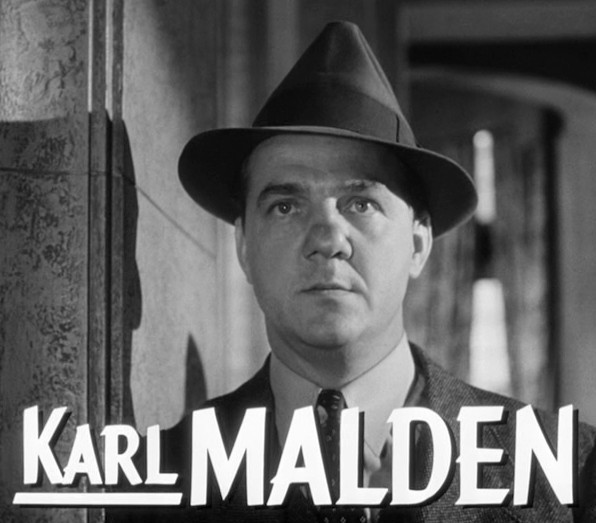
The War On Celebrities Continues: Karl Malden Is Dead


Here's the obituary of Karl Malden, dead at age 97. Maybe someone will prove that there was a period in the past where more celebrities died, but until then, I'm going to assume that, as Jon Stewart put it, "there's a serial killer who only kills celebrities with pre-existing medical conditions."

Anyway, Malden was a very fine actor who did a lot of good work in his long life and career, in good films and bad. He was particularly good at bringing a bit of weakness to characters who might otherwise have been too boring: the priest in On the Waterfront is someone who, as played by Malden, is someone who doesn't seem completely sure of his own rightness, and thereby avoids being a platitude machine. And of course he was very good at playing characters who were just plain weak, portraying the weakness without making them seem like complete milquetoasts (his famously strange looks helped; a tall, weird-looking man looks like someone who isn't naturally easy to dominate). A lot of his most famous roles are weak men in doomed relationships with strong, bad women: Mitch in Streetcar Named Desire, Herbie in the movie version of Gypsy, Archie in Baby Doll and Shooter in The Cincinnati Kid.


He became the kind of guy audiences just seemed to like (which perhaps interfered with his ability to play villains; he didn't always seem very threatening). Eventually he became so beloved by audiences that we could believe him when he told us of the terrifying hell that awaits anyone who carries cash.


Speaking Of Over-Edited Movies...

The death of Michael Jackson has brought some new attention to Stanley Donen's The Little Prince, mostly because Bob Fosse's "Snake In the Grass" number was an obvious influence on Jackson. It's also brought renewed attention to just how badly Donen botched that movie, even before he (or the studio) chopped it down to 88 minutes. In "Snake In the Grass," Fosse is doing a brilliant dance routine, and Donen can't or won't let us see what he's doing: not only is he constantly cutting, but he's constantly cutting to different angles, and show-offy ones at that, for absolutely no reason. I sometimes think Fosse had too much cutting in his own movies, but his cutting usually follows some kind of rhythmic logic, whereas the cutting in this number doesn't even match the rhythms of the music or the dance a lot of the time.


The Little Prince is also a case study in how a movie can make a good score sound bad. When Alan Lerner wrote in his autobiography that Donen had ruined the Lerner-Loewe score (their last together; Loewe went back into retirement after this project), I was skeptical, considering it to be just another one of Lerner's self-serving anecdotes. But while Lerner's script was weak and bears some of the blame for the failure of the film, he was right about the score. The songs are lovely, in that lush neo-Viennese-operetta style that Loewe brought to Broadway and Hollywood, and some of them have gained a bit of popularity outside the film (like "I Never Met a Rose" and the title song). But in the movie, they stop and start in awkward places, and are sometimes cut down to nothing; "Be Happy" is a gorgeous melody but you'd never know it from the way it's done in the movie.

And even the ones that are done all the way through are sabotaged by weird arrangement choices, like the decision to do half of "I Never Met a Rose" in a fake "megaphone" sound, and give the orchestra the tinny sound of an old record (which is taking pastiche too far). The dialogue in this clip is dubbed, but the song is in English, and let's face it, the dialogue in this movie deserves to be dubbed over anyway.


Donen, it goes without saying, did wonderful work on many musicals before this; this was the decline phase of his career (Staircase, Lucky Lady, Saturn 3 -- some would consider Movie Movie a return to form; I don't care for it).

Tuesday, June 30, 2009

WKRP Episode: "Pills"

By request, here's one of the episodes I haven't got around to yet. This is a season 4 episode that always feels like its story and structure would have been more at home on an Embassy TV sitcom, and also feels like Hugh Wilson may not have done his usual final rewrite on it. Everybody's just a little bit out of character. (James Wolcott, back when he was at The Village Voice, wrote a scathing review of this episode, particularly the predicability of Herb's last-minute conversion and speech.) Peter Torokvei may have done some work in this episode, or at least the lawyer scenes.

In terms of TV history, it's interesting to note that a lot of "issue" sitcom episodes from this early '80s period had downbeat or ambiguous endings. The Facts of Life, which Asaad Kelada was directing at the time, used to do this all the time, and that's what I was talking about when I said that the structure of this episode is more like an Embassy TV (producer of Facts of Life and Diff'rent Strokes) episode.

I'm not sure what the songs are in this episode apart from "What'd I Say" at the beginning.

Cold Opening


Act 1


Act 2


A Scene With And Without Music

Just something I found in my (too-small) videotape collection and wanted to post here. One of the tapes of the WKRP episode "The Painting" is an "unsweetened" version, which means it's without any of the soundtrack bits that were added after the taping, like canned laughter or post-dubbed music. Because one scene in the episode had music added after the taping, that creates a rare chance to hear a scene with and without music, but with the dialogue intact, just to get a sense of what pop music -- even played faintly in the background -- can add to the rhythm of a scene.

Here's the scene without music:


And here's the scene with music, "Breezin'" by George Benson. Note also that a few bits of canned laughter have been added to fill in spots where the audience didn't laugh. (After Bailey says "You don't like it" and Johnny repeats "I don't like it," there's a little extra laughter dubbed in.)


Monday, June 29, 2009

A Closer Look at Samm Schwartz


It's been long enough since my last Archie-related post (these posts are an outgrowth of some research I was doing) that I can justify posting this article I found around that time: what I believe is one of the few newspaper articles on Samm Schwartz, if not the only one. It's from the February 21, 1985 edition of the Miami Herald, written by Constance Prater.

One thing I should say before getting to the article is that Schwartz's work on Jughead -- which as I've said numerous times, is some of my favorite work in any comic book, from any company, superhero, cartoon, whatever -- actually got better after his company was no longer as good.

Schwartz was with MLJ/Archie almost from the beginning (he may have been brought in by his friend Joe Edwards), and he always did good work; he later became the primary Jughead artist and soon became synonymous with that character, whose humor and stories were a little different from everybody else's. (Archie's most popular character with its predominantly female audience is Betty, but I suspect that with boy readers, Jughead is the favorite; he certainly was mine.) In the mid-'60s Schwartz was lured away by the ill-fated Tower Comics to be one of their editors and artists; he drew most of the "Tippy Teen" comics. When Tower folded, he went back to Archie, which really needed him back: in his absence, the art on Jughead had been suffering badly. (When Schwartz left, the title was given to another veteran, Bill Vigoda, who simply wasn't as good.)

Schwartz's work after coming back to Archie was even better than it had been before, loosened up by his experience at Tower. He started throwing in more crazy background gags of his own, and returning to the '40s/'50s style of not respecting the boundaries of the panels: characters' legs and arms would protrude from one panel to another, they would stand on the speech balloons of the people in the panels below them:


Schwartz was also essentially a one-man operation. He did all the inking and lettering himself (even using the same lettering for nearly all his story titles); it was said that when they sent him a story, the editors never knew exactly what they were going to get until they received the completed black-and-white version.

Here's one of my favorite examples of Schwartz's elaborate bacgkround gags: while the exposition is going on, we see a complete story playing out in the background: somebody finds a bird in his locker, the bird flies over and snatches Mr. Weatherbee's toupee.


As the '70s went on and proceeded into the '80s, the artwork at Archie was no longer what it had been. Dan DeCarlo got kind of bland; Harry Lucey was diagnosed with Lou Gehrig's disease and retired in the middle of the decade; he was replaced with DeCarlo, his sons, and DeCarlo-alikes like Stan Goldberg. Schwartz (and Bolling, when he contributed) was immediately recognizable to a young reader as having a different, funnier style than the "house" style that had emerged.

But in 1987, as part of their big series of shakeups -- which included a bunch of new titles that failed -- Archie comics re-launched two of their most popular titles, Betty and Veronica and Jughead, with the same title but a new series (starting with a new issue # 1). DeCarlo continued to do the new B&V, up until the company ungratefully fired him and wrote him out of their history. But the new Jughead series was not drawn by Schwartz. He continued to do Jughead stories for the company, but he was no longer the primary Jughead artist. Maybe he was no longer able to do it on a regular basis, but I wouldn't be surprised if his look was considered too old-fashioned. Whatever the reason, that was the end of the last really first-rate series Archie ever did.

And with that, here is the article I should have posted earlier:


CARTOONIST'S WORK MORE THAN FUNNY PICTURES

SAMM SCHWARTZ HAS BEEN DRAWING JUGHEAD COMICS FOR 41 YEARS.


Jughead, the hamburger eating Riverdale High student of comic book fame, is up to his old tricks again. He has programmed the school's new robot teaching assistant to fetch French fries and hot dogs for his friends. Samm Schwartz looks up from the drawing board in his North Miami Beach home and smiles.

"You know it's not always easy being funny. It's a question of what's funny," said Schwartz, a 64-year-old cartoonist who has been sketching Jughead's antics with pencil and ink for nearly 40 years. "It's not so much me drawing funny pictures. I draw pictures of people doing funny things," said Schwartz.

His artwork -- glimpses of Archie, Betty, Veronica and the whole Riverdale High gang from Archie Comics -- has appeared in English, Spanish, French and Italian comic strips.

Drawing for a living isn't easy, Schwartz said. Like when he sits down at his drawing board and stares at a blank sheet of paper.

"You reach into the drawer and take out a mortgage bill, a phone bill or an electric bill and suddenly you're inspired," he said.

Schwartz "was good then and he's even better now," said fellow cartoonist Bob Bolling.

Bolling, of Miami Lakes, started drawing for Archie Comics 25 years ago. Schwartz was one of the first people he met.

Schwartz's artistic career began when he was a boy, drawing chalk caricatures of cowboys on the sidewalks in Brooklyn in the 1920s.

President Franklin D. Roosevelt's Works Project Administration paid for free art classes for him at neighborhood schools.

He also attended the New York University School of Architecture and Allied Arts, the National Academy of Art and Design and Pratt Institute in Brooklyn.

His parents told him he could never make a decent living as an artist.

"For a while, they were right," Schwartz said.

His first job was as an apprentice in one of New York's many fashion studios, drawing sketches of women's fashions for department stores.

"I was a glorified go-fer," he said.

He also got 60 cents for posing as a male fashion model.

Although the comic book craze began in the early 1920s, it didn't take off until 1938 and the beginning of World War II.

Comics were the most popular selling magazines then. The public's obsession with the pictured stories of heroes like Superman, Captain Marvel and Wee Willie Winkle helped fuel young Schwartz's passion for the art.

"People were hungry for entertaining reading. A lot of GIs read them, which is no reflection on their mentality," he said.

He took his sketches, pencils and ink and knocked on publishers' doors.

In 1942, he began drawing for M.L.J., which later became Archie Comics.

"I was just getting a toehold when I was drafted," he said.

For the next two years, Schwartz was a drill instructor, public relations specialist, visual training aide and radio and radar mechanic for the U.S. Air Force.

He was stationed in Bal Harbour for 19 months.

In his spare time, Schwartz made extra money drawing portraits of his buddies' girlfriends and wives.

After the war, he went back to Brooklyn and Archie.

He used to draw as well as write the scripts, but creating the stories was too strenuous.

"It's on your mind 24 hours a day. It's much easier for me to draw a person doing something than describe it. It got fatiguing," he said. "Afterward, I didn't have energy to draw."

Schwartz has lived in North Miami Beach since 1979. He said he enjoys being his own boss.

"You don't have to punch a time clock. You don't have to get dressed in the morning. I don't have to shave if I don't want to."


To wrap this up, here is a story from Schwartz's golden '70s/'80s period, a story that has haunted me ever since I read it as a child, even though -- then and now -- I could never tell you what the point of it is. Jughead is kidnapped by a cult whose leader wears a similar hat, has the legend "B.S." tattooed on his head, and whose God is named "Harold," and Schwartz plays the whole thing so deadpan that it really seems like this is just another irritating distraction for his favorite character.

The opening of the story also shows off another late Schwartz trademark: putting the credits in unusual places. Once he was allowed to include credits, he would frequently make them part of the scene, as he does here (and sometimes he'd turn them into one of his graffiti gags, calling himself "Good ol' Samm" or something like that). Click on a page to enlarge:

(1) (2) (3)

(4) (5) (6)


Saturday, June 27, 2009

The Essence of Late '70s TV

The death of Farrah Fawcett has caused a lot of people to write about TV in the late '70s (see Jim Henshaw's post for one of the beest examples) and what it was like. By "the late '70s," I tend to include 1980 and maybe even the early '80s, when there was a recession going on and the '70s air of despair and malaise (tm) was still being felt everywhere. TV was an escape from all that.

It was unquestionably more of a true mass-entertainment medium than it is now; the hit shows back then were watched by many more people than you get for most so-called hits today. The quality of writing and production was, overall, lower than TV today, with some exceptions (situation comedy was probably in better shape then than it is now).

But the most distinctive thing about the era was the style, a strange combination of several trends from earlier in the '70s. The early '70s had loosened network TV censorship a bit, while the mid-'70s tightened censorship again through the imposition of the Family Hour. The mid-to-late '70s was also a period when producers discovered that audiences' tastes actually hadn't changed very much (whereas in the early '70s, it was often assumed that audiences had become more "sophisticated"); this culminated in the success of the totally unsophisticated Star Wars, but it was a lesson Hollywood had been in the process of learning for several years.


So by the late '70s, network TV was able to say and show more than in the '60s, but it was aiming to be even more unsophisticated than TV of the '60s (which, given that that was the era of witches, genies and martians, is really saying something). The new freedom of the early '70s was still there, but it was now channeled into titillation, broad comedy, fantasy and action.

It was to television what Star Wars was to movies -- a rebuttal of everything anybody had ever said about the "maturing" of the audience. I say that to describe the era, not to put it down. A lot of these shows, like Star Wars, succeeded because they were very entertaining. More than that, they hold up better as entertainment and even as art (using the term loosely) than the television that critics claimed was Good For You. If it's a choice between Laverne and Shirley and Larry Gelbart's deliberately unfunny comedy United States, the former is much better written. But it was an era when series television was mostly very simple: simple storytelling, simple morality, simple characters.

It was also an un-ironic age of TV, when -- again, like Star Wars -- the most old-fashioned and silly plots would be trotted out and done without any self-mockery. It was the last era when a show could do, without any sense of humor whatsoever, a plot like this from the show Vega$: an evil hypnotist brainwashes the hero's dumb sidekick to kill the hero whenever he hears the trigger word "Superstar." In the '60s, this story would have been done tongue-in-cheek. In the 1979-80 season, it was played absolutely straight:


Even shows that aimed to be sophisticated had to incorporate those "unsophisticated" elements in order to succeed. And sometimes the need to be silly, flashy, and titillating actually improved a show. That's one thing I love about Taxi, that it takes the MTM style -- smart but often a little stolid -- and pumps it full of the things a show needed to be on ABC in the late '70s: broad, kid-friendly silliness (Latka), a beautiful woman who is inappropriately bra-less (Elaine), hunky young guys to keep the women watching (Bobby, Tony, probably not Randall Carver), and out-and-out fantasy (many episodes involving Latka or Jim). The mix of early '70s smart and late '70s goofy produced a great show. WKRP in Cincinnati, which can basically be described as The Mary Tyler Moore Show re-tooled to look like Three's Company, also has that appealing mix of styles.

And of course there was Soap, an "issue" comedy in the early '70s Norman Lear vein, written by the person who wrote the Maude abortion episodes for him, which got by in the late '70s by pumping itself full of titillation, goofiness, fantasy, etc. You literally could not do a smart show in 1977-8 if you weren't willing to make it look stupid, but the stupid elements probably helped make a smart show more interesting.

We'll never see the like of late '70s TV again, except in an ironic sort of way. On the whole, that's probably a good thing, but even a bad late '70s show can be strangely watchable. It was perhaps the last golden age of television showmanship, of scripted TV producers who would do anything to entertain us.

Wednesday, June 24, 2009

Grudge Match: Mr. T vs. the Rest of the A-Team


B.A. Baracus, aka Mr. T, has decided that he's had enough of those crazy fools drugging him and putting him on planes. He decides to throw all his former teammates "helluva far" and go back to fulfil his dream of working as a doctor.


Mr. T is the toughest member of the A-Team, and has proven that he can take any one of them in a fight. But what happens when he goes up against Face, Hannibal and Murdock (and possibly Amy if you want to count her) as a team? Can he beat all of them, or do they once again find a way to knock him out and put him on a plane?


It's difficult to know who will win, but it's not difficult to predict that Face will be the first to get beaten up.

Sunday, June 21, 2009

When Did Movies Start To Become Over-Edited?


Today was Vincente Minnelli day on TCM. Though I'm a big fan of Minnelli as a visual stylist, his career is awfully uneven. I've called him the Michael Curtiz of MGM -- a director with a great eye and a distinctive visual style but not really someone who did a lot to shape the scripts he worked with, handled every type of movie that his studio specialized in (different specialties at WB and MGM), and could be depended on to make a first-rate movie if the producer gave him first-rate material to work with.

The essence of Minnelli's visual style is, of course, the long take with the fluid, constantly-moving camera, a style influenced by Max Ophuls. But to some extent, this was just Minnelli's personal spin on the MGM house style (just as Curtiz's shadows-on-the-wall trademark fit in with the Expressionism-influenced Warners house style). From at least the '30s onward, MGM movies frequently did whole scenes, or long parts of scenes, in one take. Look at, say, A Night At the Opera: many of the scenes with Kitty Carlisle and Allan Jones are one-take scenes, and in the Arthur Freed unit, the non-Minnelli movies have as many long takes at the Minnelli films. That's just the way the producers cut the films, and the way the directors shot them:


Other studios tended to be heavier on the editing, particularly Warners, where Hal Wallis loved editing (Jerry Lewis said that the one way to insult Wallis was to question his instinct for cutting). Warners films of the '40s are much quicker to cut back and forth between characters than MGM films, which will often keep the characters in the same frame for as long as possible.

But one thing all, or nearly all, movies from this period have in common is that they have fewer cuts than almost any Hollywood studio movie being made today, or even in the last 20 years. Which brings up a question I often wonder about: when did cutting become the default technique for any scene in a Hollywood film? Or to put it another way, when did the two-shot turn into a special effect?

I remember that in the '90s, when I first got interested in "classic" film, I started noticing that contemporary films had all kinds of edits during a scene that an older film probably wouldn't have had. Even at cut-happy Warner Brothers in the '40s, it was reasonably common to at least use the master shot for the first part of a scene before cutting in, or to keep the characters in one shot when it would enhance the comedy (like the "shocked, shocked" scene in Casablanca). But by the mid-'90s, even if characters were sitting on a park bench or in the back seat of a car -- sitting side-by-side, facing the camera, nothing obstructing our view of either character -- the scene would cut between them almost immediately. It wasn't only Hollywood movies, because non-Hollywood movies also seem to have more cutting than they used to, but it's more pronounced in Hollywood films.

The saddest example of this from the mid-'90s was the Pacino/DeNiro scene in Heat, which after all the hype, almost never had them in the same frame together. That's cinematic malpractice, but it was the logical culmination of the idea that a two-shot is, in essence, a special effect or a gimmick. Whereas at MGM or Paramount in the '40s, the two-shot was an essential part of film grammar.

There are many reasons why this happened: the increased ease of editing, the increased power of editors. The lack of directors who "cut in the camera" to protect their shots (John Ford, Orson Welles, et al would shoot important scenes with no "coverage" to make sure they couldn't be re-cut). A reaction against the '50s and '60s when Hollywood movies went too far in the opposite direction, trying to fill the CinemaScope screen by going as long as possible without cutting in.

There's also the increased use of practical locations instead of studio sets, as well as the increased emphasis on realistic placement of the actors. If you're going to put the actors in positions that actually look like where people might really sit or stand, then it's unlikely that both of them will be in clear view of the camera. (This is one reason why from the '50s onward, multiple-camera television shows rarely use two-shots or long takes: the actors have to be positioned in a way that makes them visible to the audience, and then the cameras have to catch them wherever they happen to be.) Whereas you'll notice in any Minnelli movie, there are scenes where the characters sit or stand in very awkward or artificial ways, so that they'll both be clearly seen in the shot.

But I think Hollywood movies today have gone too far with the over-editing, losing sight of what can happen when you put two actors in the same frame and let them interact. It often seems like movies are obsessed with picking and choosing the best bits of each take, whereas it can often happen that the "flawed" bits of a long take -- the ones that would be eliminated in editing -- give a scene its character and spontenaity.

Here's a scene from the master of the long, static take (that is, long takes with little or no camera movement, as opposed to the fluid takes of Minnelli or Ophuls), John Ford, in Two Rode Together. If Ford had cut in, selected bits of other takes -- though he didn't even do other takes for this scene -- it would be less rough, less funny and less real. It wouldn't be worth the greater "realism" of letting them move around more, and it wouldn't be more "cinematic" than doing the scene with cuts.


Why isn't that movie on DVD, by the way? Ford, Jimmy Stewart, Richard Widmark, a Western -- is there some kind of rights issue preventing Sony from bringing it out?

Wednesday, June 17, 2009

Chuck Jones, Always The Same

If you haven't checked out Chuck Jones' letters to his daughter Linda, being posted on the Chuckjones.com blog, I suggest you do.

The letters are from 1952, and some of them mention cartoons he was working on: he talks about the scoring of "Wild Over You", seeing the final assembled version of "Duck Dodgers," and pre-production on "My Little Duckaroo." There's also a look at WB's corporate freakout about the television menace (this being before Jack Warner became the first mogul to embrace television).

Other letters don't say much about the cartoon business and talk about personal matters, dieting, politics, movies he's seen (loves High Noon, dislikes that strangely unfunny Howard Hawks segment in O. Henry's Full House), and square dancing, which, as Michael Barrier has mentioned, was a big Termite Terrace obsession.

The thing that impressed and surprised me about these letters was that (and a commenter at Thad K's blog already made a similar point) Jones was essentially the same even when he wasn't trying to impress anyone. I always kind of assumed that, like many aging filmmakers, Jones's public persona -- in his interviews and his books -- was a bit of a put-on. (It certainly seemed of a piece with the self-indulgent turn his later films took.) But the Chuck Jones who emerges in these letters is pretty much Chuck Jones as he later presented himself to the public. That's not to say that these letters encompass all of Jones's personality, just that they reveal that as the best cartoon director in America (which is pretty much what he was in 1952) he was not substantially different from what he was when he wrote and talked about those golden years.

Even his descriptions of the characters, when he offers them, show that his view of (say) Daffy Duck was not a reductive idea he made up after the fact, but something he had in mind at the time:


I love Daffy dearly, he is so completely and foolishly human. I think he serves to accent all the human frailties and vanities and conceits and is funny doing it.
(Oct. 1, 1952)


Letters are being posted when they have a chance. I'll be interested to see if there are any letters where he sets out the "rules" for the Road Runner/Coyote series. I used to think it was something he made up after the fact; now I'm not so sure.


Monday, June 15, 2009

Kubrick Addendum, Or, The Dangers of Flippancy

One thing I should add to my comments about Stanley Kubrick is that my Kubrick-bashing isn't uniform, even when it comes to his later stuff.

Oddly enough, I think I would be less anti-Kubrick if it weren't for Strangelove, which is supposed to be his most accessible movie. There are things I like in 2001 and Barry Lyndon, but Strangelove is one of those movies that has always gotten me upset because every viewing of it gives me a feeling of wasted potential; I always feel like Kubrick wasted the script and performances with his approach. This, of course, is a bizarre way to look at it; as producer and director and co-writer, he's heavily responsible for the quality of the script and performances. But I can never watch that film without thinking that there's something deeply screwed up about the timing and pacing of it. And I have always felt that the Vera Lynn ending is a cop-out, a way of avoiding the issue of whether or not the world actually does blow up at the end. (We're free to assume it did, but we're also free to assume that it's just a montage of stock footage, and more importantly, we're spared the actual horrifying sound of the explosions.)

And this, of course, is the danger of letting flippant Twitter comments cross over onto longer posts without thinking about what one is going to say. A Twitter comment is a hit-and-run thing ("Kubrick is overrated"). Translated directly into a post, it sounds like contrarianism for its own sake, which I try to avoid. (I'm not saying I don't do contrarianism for its own sake; it's hard to avoid completely, especially if you do hold some actual contrarian opinions.)

Twitterin' Away Their Noon Time, Supper Time, Chore Time Too


One thing I should say, in lieu of a post, is that I now have a Twitter feed, which I mostly use for what might be called post-ettes: thoughts, or links, that could be a blog post, and that I might eventually turn into a blog post, but might not.

I find Twitter easier to deal with than Facebook for that reason; it can be used as a way of doing some of the things one does in a blog post -- express an opinion, link to a video -- without the amount of time needed to write an entire blog post. It's blogging with a shorter time investment.

I'll keep blogging here, and as I said, some of the stuff I write on Twitter eventually finds its way here, but if you're looking for extra videos, links, or bizarre statements that I have not yet backed up, Twitter's the place for me t'be.

Current example is that in my most recent twitter or tweet or whatever, I mention that Stanley Kubrick is "the king of all that is overrated in film," but that's something I will eventually need to back up in a longer post.

(Shorter version: I have the same problem with Kubrick as I have with a lot of Bergman, but '50s and early '60s Bergman is so good that it more than compensates for what he became after he started to banish music, humor and humanity from his movies. Kubrick, on the other hand, was always pretty damned inhuman, and unlike Bergman, he couldn't even handle comedy if he tried; Dr. Strangelove has to be the most glacially paced, poorly-timed of all "classic" comedies. I remember seeing the thing at a young age and wondering even then why, even though the scripted jokes were clearly funny and the performances were clearly funny, it seemed like the camera and sound mix were going out of their way to kill the jokes. That was the first Kubrick I saw and it's all been downhill from there, except for The Killers The Killing and possibly Paths of Glory.)

Update: Advice to those attempting to bash Kubrick: do not, as I did, write "The Killers" when you mean "The Killing." Tends to decrease one's credibility. (Let's not even get into "The Killing" vs. "Killer's Kiss.")

Friday, June 12, 2009

Talk About Your Unsatisfying Finales, Or, The End of Robin Malone

I was looking through the comics sections in some old newspapers, and came across the final strips of Bob Lubbers' cult-ish strip "Robin Malone,", a short-lived late '60s strip about the soap-opera adventures of an improbably hot woman, like Mary Worth drawn in Li'l Abner style.

Anyway, on Sunday, March 8, 1970, "Robin Malone" presented its last, inconclusive Sunday page. But there were three more daily strips left in its run after that, and here they are:

March 9, 1970


March 10, 1970


March 11, 1970


The next day, the papers carried a note saying to look for a new strip where "Robin Malone" had once been. One paper at least told its readers exactly what had happened:


Another paper ran the final strip without the "end of Robin Malone" caption, suggesting that it was not intended to be the final strip, and the caption was tacked on when the syndicate pulled the plug. This may actually be a case where the conclusive ending may be worse than the inconclusive ending. Who wants to be told that the story ends that way?

Wednesday, June 10, 2009

The Other Michael Moore


I see that Michael "Micky" Moore has written his memoirs, My Magic Carpet of Films: A Personal Journey in the Motion Picture Industry, 1916-2000. Moore's name turns up on many famous films, because he started as a child actor in silent films, became a prop master at Paramount and moved up to being an assistant and second-unit director, working in that capacity from the '50s through the '90s. He was usually credited as "Michael Moore," sometimes as "Michael D. Moore."

Here's his filmography; among the films on which he worked as assistant or second-unit director were: The Indiana Jones movies, The Man Who Would Be King, Son of Paleface, Patton, Butch Cassidy and the Sundance Kid, The Ten Commandments and many Hal Wallis productions at Paramount. Wallis also let him direct one Elvis Presley feature, Paradise: Hawaiian Style. Not much of a movie, but he got to direct Marianna Hill, and that's a good thing.

He did a few directorial jobs after that, but mostly worked second-unit. I haven't read his book yet, so maybe he'll tell a different story, but I think of him as an example of someone who would rather be a terrific second-unit director than a mediocre director. I'm looking forward to the book.

Tuesday, June 09, 2009

The Agonizingly Slow Death of the Cast Album

This article from the Washington Post provides a somewhat depressing but mostly accurate look at the state of the original cast album today: recording costs have grown while the recording market has shrunk, and there aren't even many good recording studios left in New York. The result is that whereas big labels used to routinely record Broadway and off-Broadway shows, today it's a niche market (in some ways, even more of a niche market than classical, which has international appeal) and there's no guarantee that any but the big hit shows will get recorded at all.

The article does make things sound a little worse than they are. Hit shows and even shows that aren't hits continue to get recorded; on niche labels, yes, but the recordings exist. Also, there have always been some shows that didn't get recorded. In the days when cast albums were big sellers, shows would get a recording contract before they opened (a record company would invest in the show in exchange for the privilege; Columbia put up a lot of money for My Fair Lady, and RCA did the same to get Fiddler On the Roof). But if the show closed very early, there would be no album. (An exception was Columbia deciding to record Anyone Can Whistle even though the show had already closed; too bad they didn't do the same the following year for a much better show and score, Drat! The Cat!) Today, what was considered a long run in those days is not enough to make back any of the show's money. So the fact that Cry Baby didn't get recorded isn't that strange; its 68-performance run today is the equivalent of a 1960s show that closed after a week.

Still, the obvious point is that there will be fewer shows that get recorded, and shows that are not genuine hits will have a lot of trouble finding the money for a recording. Which is a problem. American musicals didn't have original cast recordings until Oklahoma! (though the Brits had been doing such albums for years), but back then, they didn't need them; musicals were only expected to run the season -- 300 performances was considered a long run -- and what helped it do so was getting lots of pop recordings of the show's hit songs. But as time went on, producers wanted and even needed their shows to last a long time beyond their initial productions; some shows, like Sweeney Todd, lost money at first and finally paid back their investors based on all the post-Broadway productions, amateur rights, etc. A recording may not make much money for the show, but it serves as the show's calling card.

As former RCA head of theatre music Bill Rosenfield notes at the end of the article, he recorded Jason Robert Brown's score fopr an unsuccessful Off-Broadway show. It has since had many subsequent productions -- not because people saw it, but because they heard the recording. A show with no recording will not get revived, because only a few people are familiar with the score; a show with a recording will come to the attention of those who might want to produce it. One of the driving forces behind the 1994 revival of Show Boat was the then-recent release of EMI's big studio recording of the complete score, which called people's attention to the show and to the fact that it was a much richer score (with many variants and opportunities for interpolation of cut numbers) than anyone would have known from the hit tunes alone. And She Loves Me, a truly great musical that ran only 300 performances and lost money, has become a favorite in amateur productions because the recording exists to tell people how wonderful the score is, and leads them to investigate the idea of producing the whole show.

So eventually it seems like cast albums might work the way recordings do for most classical artists these days: not as a source of revenue, but a promotional tool. In the case of musicals, what's really being promoted is the idea that this show is worth producing.

Marlene Dietrich Looks Down Jerry Lewis's Pants

Readers of the blog know that Artists and Models is one of my favorite movies (it's not the greatest movie, and certainly not the movie that's most free from gaping plot holes, but its combination of satire, color, wholesome sexiness, music, timeliness and timelessness, along with its messy structure, kind of brings together a lot of what I love about cinema), but because it was just another Martin and Lewis movie at the time, there's not a whole lot of promotional or behind-the-scenes material available.

So I was pleased to see someone offer, on Ebay, what appears to be a rare behind-the-scenes photo of Marlene Dietrich visiting the A&M set, and taking an unusually close look at Jerry Lewis's "Freddie Fieldmouse" costume, which he wears in the final scene when Eva Gabor tricks him into thinking she's the Bat Lady. (Leading to Dean Martin's unforgettable line asking if anyone's seen "A bat and a fat rat.")


I haven't decided whether to bid on the photo (I like to find out that memorabilia exists, but I don't care so much about owning it), so if anyone wants to buy it, be my guest. And here's the scene that Lewis and Gabor were getting ready for in that photo:


Monday, June 08, 2009

And Now It's Time Once Again For 1997 Flashback Theatre

Thanks to reader John for sending me what must be the only promotional material Kids' WB ever created for the planned, written, developed, but never produced Daffy Duck Show. (click to enlarge)


Kids' WB sent this to their affiliates in 1997 as part of a promotional package for the 1997-8 season. As John notes, this suggests that (at least when this promo was prepared), they were thinking of it as a Saturday morning show. But I've heard elsewhere that they did consider it for prime-time as well.

Here's what the promo says, in case it's not legible:

What do the "in" kids want for breakfast every Saturday? Duck. Daffy Duck that is.

Based on his outstanding performance in last year's blockbuster, SPACE JAM, Daffy has finally gotten what he's always wanted (besides speech therapy): his own new show! For the first time in a generation, Daffy is back in front of the TV cameras with attitude, action and an all-new show that will blow the competition out of the pond. (Look for Daffy to pull some of his other Looney co-stars into his new shows.)


Warner Brothers was pushing Daffy pretty hard after Space Jam, where he was one of the few characters who didn't come off as completely neutered.

Friday, June 05, 2009

WKRP Episode: "Circumstantial Evidence"

This season 4 episode, where Venus is framed for robbery, was written by Tim Reid and Peter Torokvei. (Torokvei was a law-school graduate, something you can hear in a lot of the lines given to Carlson's inept lawyer, played by Max Wright, whose dialogue is sort of a parody of law-school textbooks.) Hugh Wilson apparently let Reid handle some of the producing duties on this episode, which explains why the cast includes several people who were associated with Reid in some way, including his girlfriend and later wife Daphne Maxwell (whose character's name, "Jessica Langtre," is a great femme fatale name) and comedian John Witherspoon (an old friend of Reid's from his stand-up days). The guest cast also includes veterans Robert Hooks and Jack Kruschen, and, in a return appearance as a different character, Michael Pataki.

In "America's Favorite Radio Station," Tim Reid said that this was originally intended as a one-hour episode, and when CBS cut it back to half an hour, they had to cut out a lot of material. He also said that "the ending didn't suit me," which is probably an understatement; the deus ex machina ending is pretty ridiculous. Also, Reid apparently wanted the story to be more about race issues, but in the final version this is reduced to one line (when Venus says that everybody assumes that he looks like the thief because "it's a black man with a beard"), and the ending invalidates even that one line.

The episode was done without an audience, and a laugh track (or post-dubbed audience responses) was used instead. Music includes "Take My Heart" by Kool and the Gang and "We Belong Together" by Tom Scott.


Thursday, June 04, 2009

Last Archie References For a While

All the Archie talk in the wake of the "marriage" gimmick including this already-legendary piece on Betty's psycho stalker tendencies -- have caused me to think even more than usual about the underrated genius of Frank Doyle, Samm Schwartz, Harry Lucey and others, and be even more P.O.'d that the Archie company respects their work so little. But I don't want to overdo it, so I'll just use this post for 1) A link to an example of great Harry Lucey art, and 2) An out-of-context panel made to look like something it isn't.

1) I've said more about Samm Schwartz than Harry Lucey, but I think I'd agree, overall, with those who say that Lucey was the greatest artist ever to work for Archie comics. First of all, he had the most range. Schwartz was basically a comedy artist who wasn't great at the pinup-girl stuff, Dan DeCarlo basically a sexy-girl artist whose comedy drawings could be a little stolid. Lucey was great at drawing sexy girls in the DeCarlo style and he did some of the funniest drawings and poses ever. And second, his poses are so expressive, he gets so much into the body language of these characters and is so good at placing them within the panels, that he did some exceptional silent or near-silent comics. He really was one of the best cartoonists in the business, who just happened to do his greatest work for Archie comics.

Here's one of the most famous examples of Lucey's talents, called "Two Little Words".

As the title implies, the writer (possibly, though not certainly, Frank Doyle) eliminates all dialogue except the words "Archie" and "Veronica," and leaves it to Lucey, and the lettering guy, to tell a typical Archie story with the visuals alone. (For another well-known example of Lucey's pantomime abilities, see "Actions Speak Louder Than Words."

2) An out-of-context (though, since the writer was Doyle, the effect is probably semi-intentional) panel from a more recent story (drawn by Stan Goldberg):


Betty and Veronica fought for 50+ years to get to that exact moment; it was inevitable that they would find it a let-down.

Monday, June 01, 2009

Stephen Sondheim's Implied Self-Criticism?

This interview with Stephen Sondheim is from two years ago, but has a comment in it that only caught my eye just now. It's when he talks, normally enough, about the importance of form and convention (like true rhymes and correct rhythm) in conveying meaning in a musical. He says, in part, the following:


It's the rigidity of form, particularly the 32-bar song form, that helps convey power... It is for me much more effective, though, if you can tell a story through 32-bar songs – or even 33-bar songs, but not through 133-bar songs.


Many people who are familiar with Stephen Sondheim's songwriting might find that statement as weird as I do: Sondheim is perhaps the most long-winded great songwriter in the history of musicals, and his biggest fault (in my opinion) has been a tendency to write songs that are too long. But even if you don't agree with me that "A Little Priest" from Sweeney Todd is twice as long as it needs to be to convey its one joke, or that some of his other comedy songs are coma-inducingly long, to think that the statement either shows a) A lack of self-awareness or b) A sense of self-criticism, like maybe he thinks his songs sometimes got too long. Or maybe his point is merely that today's musicals are long-winded even compared to his work, which may or may not be true.

One reason why Follies is my favorite Sondheim score is that the need to write songs that were homages to old Broadway show tunes seems to have had the effect of disciplining him -- either that or the fact that it was in part a dance show, and some of the songs had to be short enough to incorporate substantial dance material. Whatever the reason, even the numbers that aren't pastiches are pretty normal-length and stop when they're finished saying whatever they're saying. But when he returned to the property and wrote new songs for a 1987 revival, they were... incredibly long and with a tendency to re-state the same ideas several times (plus a tendency to keep going off in new musical directions instead of coming back to the A section where they started). But many other Sondheim songs have the effect of slowing down the show by their refusal to hurry up and say what they're trying to say. His own favorite song, "Someone In a Tree," lasts seven minutes, and while it is a very fine song, it's... really, really long, and has two refrains whose structure is so convoluted that it takes you two listenings to even identify them as separate refrains. And by Sondheim's own definition, it might be more theatrically effective if it weren't so long.

This is one reason why the Sondheim songs that hold up the best are often the ones that are -- not necessarily short, but economical. (Conrad L. Osborne once wrote that Wagner's Gotterdammerung is "an economical score" despite its length, because everything in it is essential to the story. And to use a Broadway example, "Soliloquy" from Carousel is really long because the character goes through several huge mood changes within the course of the number.) The Act I finale of A Little Night Music, "A Weekend In the Country," is my favorite Sondheim song, and while it's long, it's long because it has a lot of story and action to put across (it was written, it was said, after Hal Prince had already blocked all the action); structurally, it's a series of traditional-length AABA refrains.

And sometimes it's just better to be short. "Finishing The Hat" works better than most of the songs in Sunday In the Park With George (a show I'm not fond of, admittedly) because it's short, makes its points concisely in a verse and two refrains of normal length. And let's finish this off with Dorothy Collins singing "Losing My Mind" from Follies. It's a short song because it's a pastiche of Gershwin-style songs, just one AABA refrain which is then repeated verbatim (not even new lyrics for the second refrain), but would it really tell us anything more if it were replaced by a seven-minute musical monologue?


Sunday, May 31, 2009

Archie Already Married Veronica

One more thing about this whole Archie marries Veronica in a flash-forward future story business: it's sort of been done already. This story, "Dream Boy," is from the '60s (I assume; I read it in a digest, but it has the early '60s look). The art is by Dan DeCarlo and while the writer is, as usual, uncredited, it seems like it could possibly the young George Gladir (or maybe a freelancer). And it takes them only six pages, rather than six issues, to explain how an Archie/Veronica marriage would go and how Betty would be involved. I doubt if the much-hyped new story will be as plausible.

I also love the stylized, single-color backgrounds for the fantasy sequences, and DeCarlo's portrayal of Betty's evolution from Small-Town Teen to unrecognizable glamour girl. (Click on images to see the full-sized versions.)


It's not a new observation, but: part of the secret of Archie's success is that the characters are not goody-two-shoes. They all live in a clean, wholesome fantasy world, but within the context of that world, the main characters alternate between being friends and being mean to each other, both consciously and unconsciously. I mean, it doesn't seem at all implausible to either Betty or Veronica that Betty might try to steal Veronica's husband. It's just the way they naturally see themselves.

They've all been toned way down over the years, and were even starting to be toned down within Frank Doyle's lifetime (he and DeCarlo may have created Cheryl Blossom to do some of the nasty stuff that Veronica could no longer get away with) but even now they have something resembling actual flaws, which most kids' comics characters do not.


Saturday, May 30, 2009

Happy 100th, Benny Goodman

Benny Goodman was born 100 years ago today. I'm pretty sure this is not the way he would want to be remembered.


But man, that Busby Berkeley camerawork is something else. Anyway, at least I didn't post "Minnie's In the Money."

Thursday, May 28, 2009

The Usual Comical Strip Trick

I have a web piece up about seminal Archie/Betty/Veronica moments (as seminal as you can get when you have a relationship that never changes), tying in with the famous news about the Archie "proposal."

And while I understand what Michael Barrier means when he says that "When I read Li'l Abner in bulk, the harsh mechanical qualities of Al Capp's strip force themselves on me," I find Li'l Abner holds up better than it's given credit for (better, in my opinion, than Pogo), and the current the current hullabaloo over Archie's proposal is an example of why Li'l Abner remains relevant: they're using all the tricks that Al Capp parodied in the "Fearless Fosdick gets married" storyline, and we're still falling for them.

Also, while I don't want to turn this into a Peanuts discussion blog, I don't agree with the idea that Peanuts "softened" in the '60s; on the contrary, it was a much "softer" strip through most of the '50s, more focused on day-to-day gags about the things kids say to each other. It was in the late '50s and early '60s that Schulz started to move into longer storylines, more direct addressing of contemporary events and issues. Not that there was anything wrong with the strip in the '50s, but the comedy became much sharper and more biting around 1959, staying that way through the mid-'70s.

And while the increased emphasis on Snoopy might have had some negative results, it also helped the strip expand into subjects it couldn't tackle before: because Snoopy was the only character in the strip who was not a child (and in his fantasy life he always imagined himself as an adult, not a child), it allowed the strip to take on things like the space race, college life (Joe Cool) and, of course, war.

Peanuts

I will say, though, that the Snoopy emphasis of the early '70s is an example of how something can be more of a problem when you read strips one at a time, rather than in bulk. When I read the 1971-2 strips in the new "Complete Peanuts" volume, the huge number of Snoopy and Woodstock strips doesn't bother me, since most of them are funny. But when the Peanuts website was running 1971 and 1972 strips one a day a few years ago, the Snoopy/Woodstock stuff irritated me because it seemed there were too few days that went by without those two. In a book, you can just turn the page to find a strip with the other characters. So that's an argument against my idea that strips come off better in day-to-day reading.

Sunday, May 24, 2009

We Had a Little Doggie, We Used To Call Him Fred, But Now We Call Him Nothing, The Reason Is He's Dead

After another Animaniacs discussion on a message board, I thought I would come back here and create another chapter in the story of my ongoing refusal to apologize for liking it. Anyway, one of the differences between the show on Fox and on the WB is that most of the WB episodes presented the characters as less mean, or at least less aggressive. This seemed to be an attempt by the writers to get away from the formula they had created in the year on Fox, where the three main characters would get revenge on some kind of authority figure. The first season on the WB had several cartoons that basically admitted that the writers were tired of this formula or at least felt that it was played out; if the final volume of episodes ever comes out on DVD -- which seems increasingly unlikely -- it'll start with this cartoon:


Breaking away from formula and getting more self-referential had actually helped the quality of Tiny Toons, where the final 35 episodes are generally of higher quality than the first 65. Though "Animaniacs" had a number of good cartoons on the WB, the change in formula seems to have hurt more than it helped, especially when it came to the cartoons with Yakko/Wakko/Dot. Although their cartoons were not "classic" cartoons, they worked better in something resembling a classic cartoon format: simple, strong premise which can give rise to a series of gags that are related to the premise, and a satisfying ending. When they're put in other types of stories -- either long-form stories like the two-part "Hooray For North Hollywood" (originally thought of as a story for an Animaniacs movie) or full-length movie parodies, they wind up standing around and not doing very much. Looking back on it, there are a lot of WB-era "Animaniacs" cartoons where nothing much happens until the cartoon is half over.

But on an up note, here is one of the WB-era cartoons I like the best (and the one which would induce me to buy a vol. 4 DVD if it ever came out). It could have been another static movie-parody cartoon, but as written by Paul Rugg (who really seemed to like these three characters, or at least write them as likable; it isn't easy to avoid making them three smug little assholes, but he usually did it), it abandons the movie premise pretty quickly and becomes a story about cartoon logic: if a cartoon character can only attack when provoked, then what happens when their antagonist never actually provokes them by being mean or rude? The Simpsons did a somewhat similar episode a year later when a Mary Poppins-type nanny came to live with the Simpsons; Animaniacs did it better.


German Lobby Cards Are Better

Sorry for the lack of posts lately. I don't actually have much to say at the moment, but after looking at the German movie database Cinema.de, I have concluded that the lobby cards and promo shots for American movies were often a lot more entertaining in Germany than in America. It just seems like the American lobby cards tended to feature scenes that weren't particularly intriguing, while the German cards were more willing to take an attention-grabbing kind of approach. So here's an American lobby card from Artists and Models, whose promo campaign seemed to over-literally focus on the scene at the artists and models ball (as well as making it seem like Anita Ekberg had more to do in the film than she did):


Not bad, but here are two German lobby cards from Maler Und Mädchen :


You know -- lobby cards that tell you nothing about what the movie's about, but promise more than the movie will probably deliver. The German lobby cards even managed to make such promises for an almost completely sexless movie like The Searchers or, rather, Der Schwarze Falke ("The Black Falcon").


In a way, it's just a lobby-card version of that old joke poster "SEX! And now that we've got your attention..." But what else are lobby cards for?

Tuesday, May 19, 2009

"You Make Me Feel So Young"

Josef Myrow has long been my candidate for the dullest successful pop composer of the "Great American Songbook" era; he composed many songs for many Hollywood musicals, but most of them are quite bland. (Every time I would watch a '40s or '50s musical and hear a song where the melody had no distinction and didn't go anywhere, I would find it was by Myrow.) But he did manage at least one song that has stood the test of time: "You Make Me Feel So Young" from Three Little Girls In Blue. Even this song doesn't have a particularly great tune (in my opinion), but it's pleasant, and the way it keeps extending and building in excitement toward the end (taking the A section and almost turning it into a whole new song) is very good. And the lyric by Mack Gordon (an uneven but sometimes good pop lyricist of the '30s and '40s) is excellent.

Three Little Girls In Blue is a Fox musical that's rarely-seen because it doesn't have any big stars; another Fox story about three girls searching for love, it starred two of their Grable substitutes, June Haver and Vivian Blaine. But it's one of the best of the Fox musicals, because, for one thing, it's a real musical: unlike most of their other musical films, it doesn't relegate all the singing and dancing to show-within-a-show numbers. It's also one of the few musicals that Fox contractee Celeste Holm got to do for the studio, and most importantly, the first of only three films that Vera-Ellen did for the studio.

Fox's musical talent was generally inferior to that of other studios -- they rarely made musicals with anyone who was in the class of an Astaire or a Kelly or a Garland as an all-around performer -- so having a dancer of the calibre of Vera-Ellen kicks the film up a notch above most Fox product; though she doesn't do her own singing in "You Make Me Feel So Young," her dancing in the subsequent "dream ballet" (this was after Oklahoma! made dream ballets the in thing for about a decade) is at a higher level, in terms of performance, than the kind of number you usually get in one of these films.